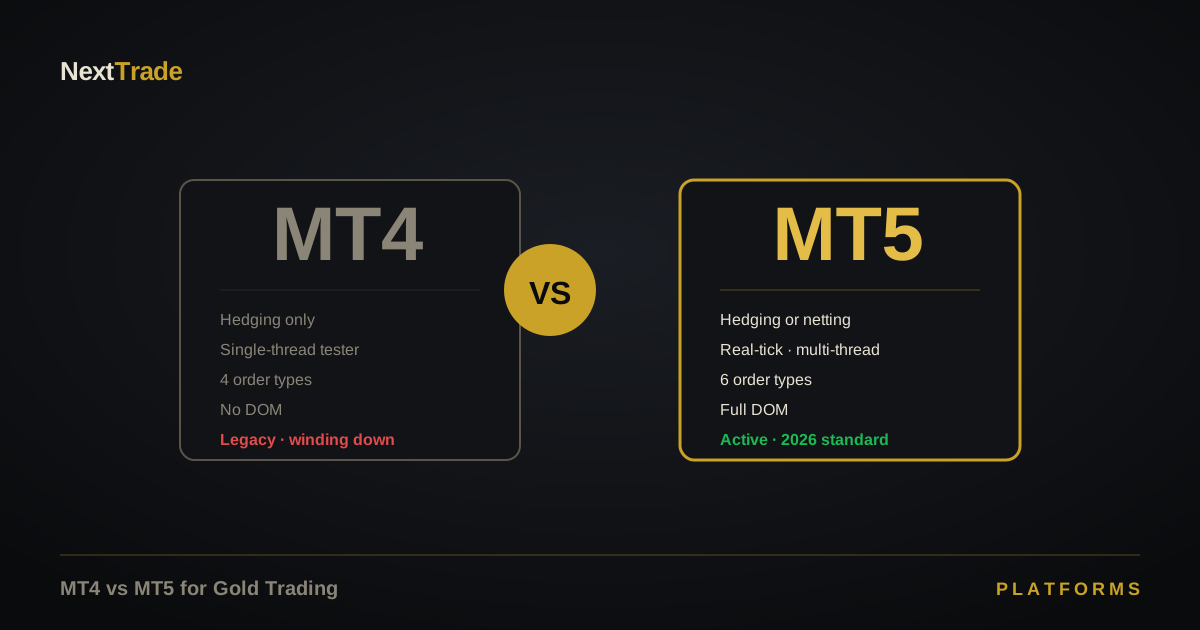
For MT4 vs MT5 gold trading in 2026, the answer is short: MT5 wins on execution, backtesting, order types, and platform longevity. The only reason to stay on MT4 is a specific EA that was never ported. For a new XAUUSD trader running automation, start on MT5.
This article compares the two platforms on the dimensions that actually matter for gold EAs.
Quick comparison table
- Execution model — MT4: hedging only. MT5: hedging or netting. MT5 wins on flexibility.
- Backtester — MT4: single-threaded, tick-simulated. MT5: multi-threaded, real-tick. MT5 wins decisively.
- Order types — MT4: 4 pending types. MT5: 6 (adds Buy Stop Limit, Sell Stop Limit). MT5 wins.
- Depth of Market — MT4: none. MT5: DOM with volume. MT5 wins.
- Language — MT4: MQL4. MT5: MQL5 (cleaner, OOP, faster). MT5 wins.
- Economic calendar — MT4: external. MT5: built-in. MT5 wins.
- Broker availability — MT4 still has wider coverage, but the gap is closing fast.
MetaQuotes' own comparison documentation lays out the feature differences in detail.
Why MT5's backtester matters for gold
XAUUSD is volatile enough that backtest fidelity is the difference between a trustworthy report and expensive fiction. MT4's strategy tester samples ticks inside each candle, which systematically under-estimates slippage. MT5's real-tick mode replays the actual tick sequence the broker's server saw — if you test an EA on real ticks and the report is profitable, the result is defensible. (For a worked example, see our XAUUSD real-tick backtest report on Exness — same modelling mode discussed here, run on a live broker.)
Multi-threaded optimization is the other big advantage: MT5 uses every CPU core, cutting a 5-year walk-forward test from days to hours.
Hedging vs netting
MT4 forces hedging — you can have simultaneous long and short positions on the same symbol. MT5 supports both hedging and netting (a single aggregate position per symbol), with the mode chosen when the account is opened.
For most gold EAs, hedging-mode MT5 is the right choice — it preserves MT4-compatible behavior while giving you all the MT5 features.
MT4 is winding down
MetaQuotes stopped active MT4 development years ago. New brokers mostly ship MT5 only; some regulators require MT5 for new retail accounts because of better audit trails. The platform still works, but "still works" is not a long-term strategy.
For EA developers, the economics are worse: MQL5 is a cleaner language, the MT5 marketplace is larger, and a new EA built today is unlikely to be released in MT4 form. The MQL5 CodeBase currently hosts substantially more active MT5 EAs than MT4.
Migrating an existing MT4 EA
If you have an MT4 EA you like, two options:
- Check if the developer ships MT5. Most established products have been ported.
- Open an MT5 account and run the MT5 version in parallel on demo for a few weeks. Compare the trade lists. Minor drift is normal; major divergence means the port is incomplete.
Personal insight: the hidden cost of staying on MT4
Beyond the features, the subtle cost of running MT4 in 2026 is support. When something breaks — a broker server upgrade, a Windows 11 update, a new MQL compiler quirk — fixes land in MT5 first. MT4 patches arrive eventually, but the gap is usually 2—4 weeks.
For live-traded capital, that gap is expensive. New traders running automation should start on MT5; existing MT4 users should plan a migration path over the next 12 months. NextTrade Gold EA is built natively in MQL5 — no MT4 codebase, no port quirks. The full input list and decision flow are documented for the MT5 build only.